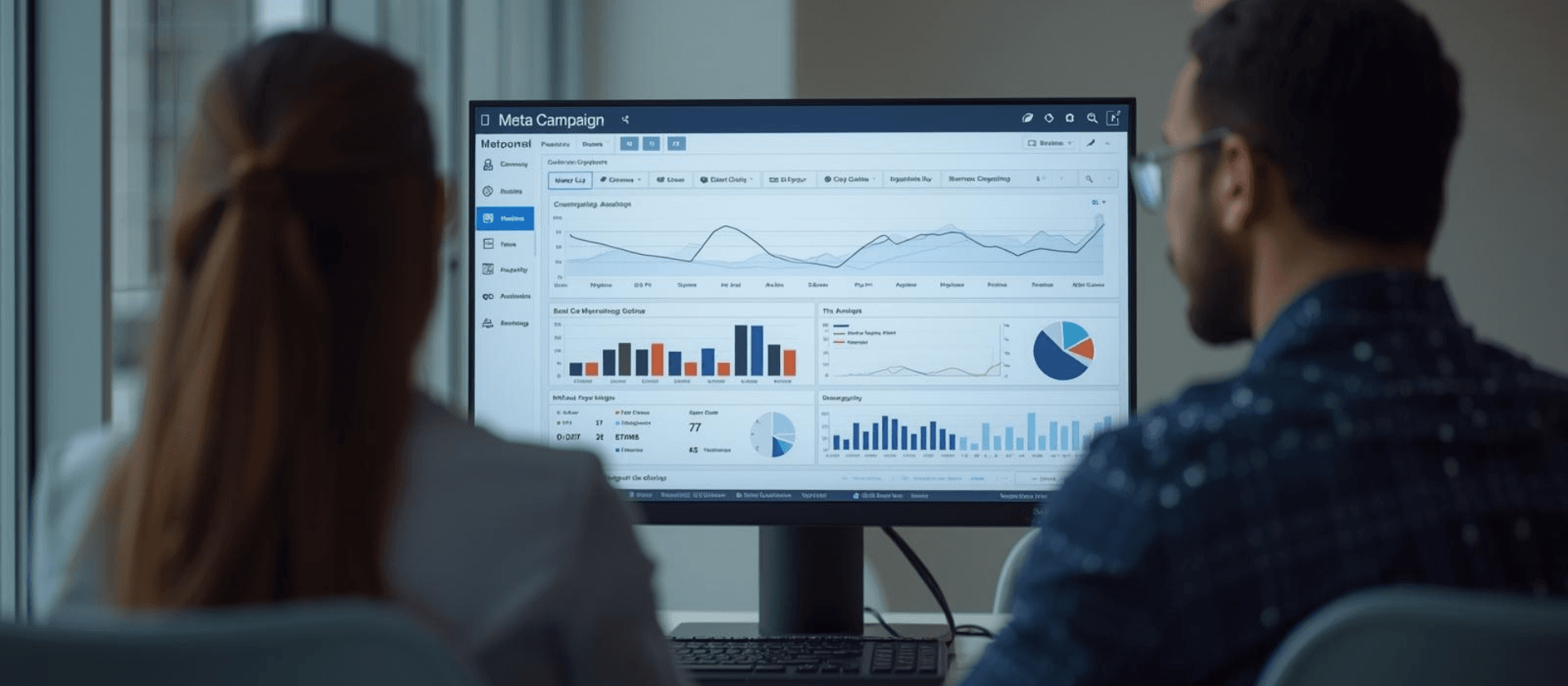
In Egypt, “campaign optimization” has become the safest word in media buying.
It sounds smart.
It sounds responsible.
It sounds like progress.
Media buying agencies in Egypt say they’re optimizing campaigns.
Reports highlight optimization efforts.
Monthly calls revolve around what was optimized and what will be optimized next.
And yet, for many businesses, revenue stays flat, growth feels fragile, and scaling becomes harder over time instead of easier.
That’s not a coincidence.
The uncomfortable truth is that most media buying optimization happens inside broken systems.
And optimizing a broken system doesn’t create growth, it simply makes inefficiency harder to notice.
When campaign optimization is treated as an activity instead of a strategic decision, it becomes a distraction that hides deeper problems rather than solving them.
What Campaign Optimization Actually Means
Campaign optimization, in its simplest form, is the process of improving ad performance inside the advertising platform itself.
It’s about adjusting variables that affect how paid ads are delivered, who sees them, and how efficiently spend is allocated.
This includes things like refining targeting, testing creatives, adjusting bids and budgets, excluding poor-performing audiences, and reacting to platform signals like CTR, CPC, frequency, and conversion rates.
Ad optimization is not fake, and it’s not useless.
In a healthy system, it’s essential.
It helps platforms learn faster, reduces wasted spend, and improves efficiency at scale.
The problem isn’t that agencies optimize ads.
The problem is what optimization is expected to fix.
In most Egyptian accounts, campaign optimization has been promoted as a growth solution, when in reality it’s a performance tuning mechanism.
It assumes that the offer makes sense, the landing experience converts, tracking is accurate, and the business can actually handle increased demand.
Without those conditions, optimization becomes reactive.
Paid ads are constantly adjusted to compensate for issues that exist far outside the ad account.
Optimization Has Been Reduced to Button-Pressing
In its current form, campaign optimization is often reduced to tactical adjustments inside paid ad platforms.
Changing audiences.
Tweaking ad creatives.
Adjusting bids.
Pausing underperforming paid ads.
These actions are not wrong, but they are mechanical, not strategic.
They assume that the system receiving the traffic is fundamentally sound.
Most media buying agencies optimize what they can control easily which is the ads.
What they avoid is questioning what’s harder to fix, marketing funnels, UX, technology, data integrity, and business readiness to scale.
This is where campaign optimization becomes misleading.
It creates the illusion of progress while the core engine remains unchanged.
When results don’t improve, campaign optimization simply becomes more frequent, not more effective.
You Can’t Optimize Your Way Out of Structural Problems
One of the biggest myths in media buying is that enough optimization can compensate for weak foundations.
It can’t.
If the website is slow, confusing, or built without conversion logic, no amount of ad optimization will fix that.
If tracking is inaccurate, decisions are being made on false signals.
If the funnel leaks, ads only accelerate the leak.
In these cases, optimization doesn’t increase growth, it increases waste.
This is why many Egyptian brands experience a familiar pattern, from early traction, followed by stagnation.
Ads work “well enough” at low spend, but as budgets increase, results flatten.
Agencies respond by optimizing harder, while founders assume platforms have become more expensive.
In reality, the system was never designed to absorb scale.
Optimization didn’t fail.
It was simply applied in the wrong place.
Real Optimization Is System-Level, Not Campaign-Level
True optimization doesn’t start inside ad accounts.
It starts by asking whether the entire acquisition system is designed to grow.
That includes the website’s UX, the clarity of the offer, the logic of the funnel, the accuracy of data, and the ability to iterate without breaking everything else.
Real optimization might mean:
- Simplifying user journeys instead of launching new campaigns
- Fixing checkout friction instead of testing new audiences
- Improving site performance instead of rewriting ad copy
- Restructuring funnels instead of adjusting bids
These changes don’t always feel like “media buying work,” but they are the reason media buying either scales or collapses.
Agencies that only optimize ads are working on the surface.
Growth happens underneath.
When Optimization Stops Working
Ad optimization stops working the moment it becomes the answer to every problem.
When revenue dips, optimize.
When ROAS drops, optimize.
When growth stalls, optimize again.
At that point, optimization isn’t a tool, it’s a reflex.
This is also when agencies start protecting metrics instead of outcomes.
They optimize for what looks good in reports, not what moves the business forward.
CTR improves. CPC stabilizes. But revenue doesn’t scale, and no one can explain why.
The truth is that optimization can only amplify what already exists.
If the underlying system is weak, optimization amplifies weakness.
If the system is strong, optimization accelerates growth.
Campaign Optimization Is Not a Growth Strategy
The biggest mistake Egyptian ecommerce brands make is treating optimization as a strategy rather than a component.
Ad optimization should support strategy, not replace it.
Growth comes from intentional decisions about systems, not endless adjustments inside tools.
A growth-focused media buying approach asks harder questions:
- Is the business ready to scale demand?
- Is the website built to convert paid traffic efficiently?
- Is data reliable enough to make confident decisions?
- Is the funnel designed around real user behavior?
If those questions aren’t being asked, optimization is just busy work.
Final Thought
“Ad Optimization” has become a comfortable word in media buying because it sounds like progress without forcing accountability.
But real growth doesn’t come from optimizing harder.
It comes from fixing what campaign optimization is being applied to.
Ads don’t fail because they aren’t optimized enough.
They fail because they’re asked to compensate for systems that were never built to scale.
Until that changes, optimization will remain the most abused word in media buying.
FAQs
What does real campaign optimization mean in media buying?
Real campaign optimization focuses on improving the entire acquisition system, funnels, UX, data, and scalability, not just ad-level metrics like CTR or CPC.
Can optimization fix low revenue?
No. Campaign optimization can improve efficiency, but it cannot fix structural issues like poor UX, broken funnels, or weak offers that limit revenue growth.
When does optimization stop working?
Optimization stops working when it’s used to mask deeper problems or when it becomes a substitute for strategy instead of supporting it.
Why do agencies focus so much on optimization?
Because it’s measurable, controllable, and easy to report on, even when it doesn’t lead to real business growth.
What should come before optimization?
A clear growth strategy, solid website UX, accurate data tracking, and a funnel designed to convert and scale.